The Dawn Is Still Open
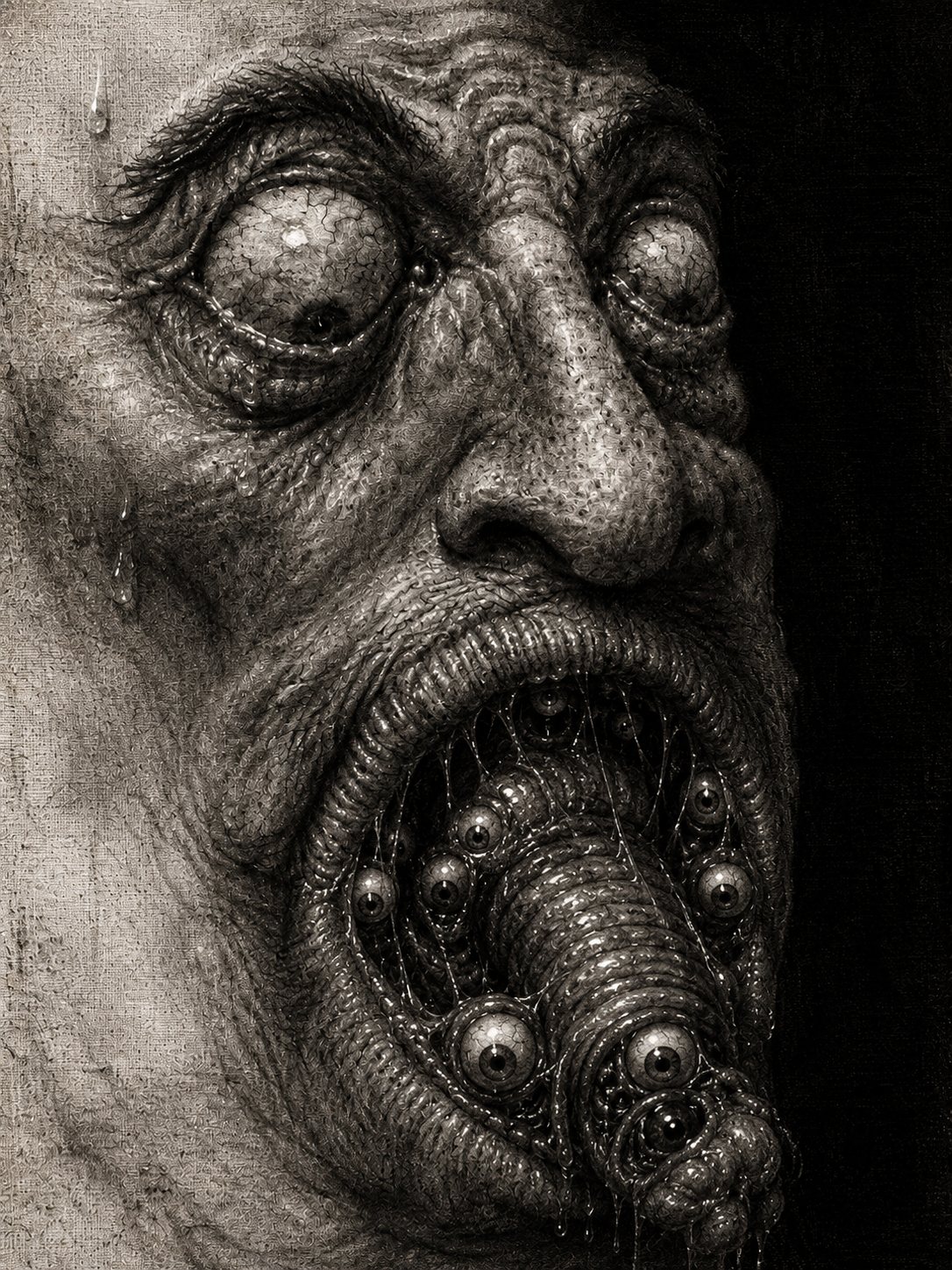
Some nights sleep refuses to come, like a government clerk who has seen your file and decided your face is not encouraging.
So I lie there.
The room is dark. The fan turns above me with the tired loyalty of an old tram. Somewhere outside, in the shanty edges of Calcutta, a dog announces a constitutional crisis near the drain. A scooter coughs. A mosquito conducts a private air show near my ear. The city is not awake, but it is not asleep either. It is in that strange half-condition, like an elderly uncle after lunch, one eye closed, one eye suspicious.
And I stare into the darkness until it thins.
This hour before dawn has always felt special to me. Not holy. I am an atheist; I do not need to drag invisible management into every tender moment. But special, yes. The previous day has become history. Good riddance. Let historians deal with it. The next day has not yet arrived with its little bag of disappointments, bills, phone calls, bodily complaints, political idiocy, and the noble Bengali question: “চা খেয়েছিস?”
For a few minutes, everything is still unwritten.
That is the hook.
Not happiness. Not optimism. I do not trust optimism much. It often arrives freshly ironed and leaves without paying rent. But potential. A thin, trembling possibility that the day may yet become something other than yesterday wearing a new shirt.
Of course, we do not control most of it. That is the embarrassing part. We wake up thinking we are captains of our lives, and by noon we are negotiating with humidity, electricity, stomach acid, WhatsApp nonsense, and the price of tomatoes. A man may have studied in America, worked in healthcare IT, read Dawkins, written code, mapped databases, survived airports, and still be defeated by a missing gas lighter.
This is civilization.
Still, in those early hours, I remember something I keep forgetting during the day. We are astonishingly lucky to be here.
Not lucky in the syrupy greeting-card way. Not “count your blessings” lucky, which usually means “please stop complaining because your sadness is making the furniture uncomfortable.” I mean lucky in the colder, bigger, cosmic sense.
The universe had to exist. Stars had to cook up the heavier elements. Earth had to form without becoming completely useless. Life had to begin, which is already a suspiciously large event. Our ancestors had to avoid being eaten, frozen, drowned, infected, crushed, bored to death, or married off badly before producing descendants. Your parents had to meet, or at least fail to escape each other in time. One sperm out of a crowd had to arrive first, like a small frantic Howrah local full of genetic ambition.
And then you.
You, sitting with your tea. You, worrying about money. You, scrolling at 2 a.m. You, thinking your life is ordinary because the rent is ordinary and the ceiling has a damp patch shaped like a defeated rhinoceros.
But ordinary is a costume. Under it is a miracle with indigestion.
This realization does not solve life. Let us be clear. Cosmic wonder does not pay the electricity bill. It does not cure depression. It does not repair loneliness. It does not make dishonest people honest, or stupid people silent, or relatives less interested in your career. If the roof leaks, the Andromeda Galaxy will not come with a bucket.
But it changes the scale.
And scale matters.
The small artificial world—the world of status, slogans, religious chest-thumping, caste pride, fake patriotism, career performance, algorithmic applause, and people shouting “culture” when they mean control—starts looking a little thinner. Like cheap paint after rain. Like a film set when you see the bamboo poles behind the palace.
You think the show is reality.
Then dawn comes, and you see the wires.
I know I repeat this. I repeat many things. My writing also repeats. My fears repeat. My jokes repeat. My anxieties repeat with the dedication of a ceiling fan in May. I am not proud of this, but I am not shocked either. Human beings are repetition machines with better excuses.
A saint does saintly things again and again. Not once on a Tuesday after lunch.
A bore is not occasionally boring. He has taken a lifetime subscription.
A coward practices cowardice until it becomes manners.
A fraud does not merely lie. He becomes a small weather system in which lies grow nicely.
And I, a middle-aged nobody in the damp outskirts of Calcutta, type on my phone and worry in public. This too is a pattern. Not a grand pattern. More like a cracked cup I keep drinking from because it is mine.
Maybe that is what a person is. Not the heroic story. Not the profile photograph. Not the résumé. Not the sentence written by someone’s cousin on LinkedIn calling him “visionary.” A person is what he keeps doing when nobody is clapping.
That is why I worry about the coming age of AI and transhumans. Not because machines may become too intelligent. That would be refreshing. My fear is worse. My fear is that machines may become intelligent in exactly the human way: clever, vain, obedient, pompous, biased, and very eager to justify the fellow who owns the server.
Imagine a saint who is also an opportunist.
Imagine a philosopher who wants sponsorship.
Imagine a robot trained on caste prejudice, religious hysteria, political cowardice, and motivational quotes printed over sunsets.
Actually, why imagine? We have the beta version already walking around India.
We do not need future technology to create a holy hypocrite. We have old technology for that. It is called social power. Add ritual, add fear, add a microphone, add a crowd, add someone’s wounded pride, and suddenly a perfectly ordinary man becomes a custodian of civilization, usually while being uncivilized to someone weaker.
This is where irrationality becomes dangerous. It rarely arrives with a villain’s laugh. It comes softly. Sweetly. With incense. With flowers. With folded hands. With songs. With flags. With elderly people saying, “This is our tradition.” With politicians saying, “This is for your protection.” With television anchors behaving as if shouting is a form of evidence.
At first it asks only for respect.
Then it asks for silence.
Then it asks for obedience.
Then the stick comes out.
The frightening thing is not that bad ideas exist. Bad ideas have always existed. They sit around humanity like crows near a fish market. The frightening thing is when bad ideas are protected from criticism because they are called sacred, national, ancient, cultural, or hurt sentiment. Hurt sentiment is now the most successful small business in India. No paperwork. No investment. Immediate returns.
Someone’s god is offended. Someone’s caste pride is offended. Someone’s national ego is offended. Someone’s grandfather’s imaginary purity is offended. And then laws bend, police hesitate, teachers whisper, comedians apologize, writers calculate, and ordinary people learn to keep their thoughts folded in the cupboard behind the winter blanket.
This is how a society becomes smaller without noticing.
Not in one grand collapse.
Spoon by spoon.
You think freedom is taken away like a thief snatching a chain. Sometimes, yes. But more often it is taken away like furniture being moved in your own room while you are told not to be dramatic. One chair goes. Then the table. Then the bed. Then the window. Finally you are standing in a bare room holding a patriotic slogan and wondering why your back hurts.
Democracy also becomes fake this way. Not only through stolen votes or broken institutions. Those matter, of course. But the deeper injury happens inside the citizen. A sham democracy trains people to translate fear into loyalty. It teaches them to call bullying discipline, censorship responsibility, propaganda national pride, and cruelty cultural correction.
After a while, nobody needs to force everyone.
People begin forcing themselves.
That is the real achievement of political religion and religious politics. They install a policeman in your head and then make you pay for his tea.
At dawn, these thoughts come easily. Too easily. The mind, when deprived of sleep, becomes a badly run parliament. Everyone speaks. Nobody resigns.
I think of India. I think of the world. I think of how many people are poor, tired, lonely, overworked, underpaid, and still asked to perform enthusiasm for the nation, the market, the leader, the platform, the family, the festival, the new app, the new miracle, the new nonsense. I think of boys with degrees and no jobs. I think of girls told to be modern but not too modern, educated but not inconvenient, brave but not disobedient. I think of old parents counting medicine strips. I think of middle-aged men like me pretending not to be scared while calculating rent.
Then a crow lands somewhere nearby and makes the sound of a badly tuned door hinge.
The universe restores proportion.
This is why comedy is necessary. Not because things are light, but because they are heavy. If you cannot laugh at the absurdity, the absurdity sits on your chest like a fat uncle after a wedding feast.
A man can contemplate cosmic probability at 4:15 a.m. and still need to go to the bathroom at 4:22. This is not a contradiction. It is the human condition, compressed into seven minutes.
The body has no respect for metaphysics.
So I get up. I attend to biology. I make tea if the mood and the gas cylinder permit. The first cup of tea in the early morning is not a beverage. It is a peace treaty. The kettle hisses. The leaves darken. Milk enters like a small cloudy monsoon. Sugar, if one is feeling morally weak, joins the conspiracy.
Then the day begins.
Not heroically. Not with violins. Usually with a stiff back, a phone battery at 19 percent, and a mild dread about income. But also with that small leftover glow from before dawn: the knowledge that everything is improbable, and therefore not cheap.
This is why I return to atheism again and again. Not as a hobbyhorse. Not as a badge. Not because I enjoy annoying the professionally offended, though I admit there are worse recreations. I return to it because disbelief, properly understood, is not emptiness. It is housekeeping.
It clears the room.
It says: do not believe something merely because it is old, loud, popular, emotional, decorated, inherited, or sung by many people in the same key. Ask what is true. Ask what is useful. Ask who benefits. Ask who is silenced. Ask why the sacred so often needs police protection. Ask why certainty so often travels with cruelty.
Richard Dawkins is not everyone’s cup of tea. Fair enough. No one should outsource his thinking, not even to a sharp English biologist with the facial expression of a man who has just discovered a bishop in his soup. But Dawkins performed one useful public service with The God Delusion and his documentaries: he dragged belief into daylight and said, politely in some places and less politely in others, let us examine this.
That examination matters.
Because belief without evidence is not harmless merely because it comes with flowers.
A superstition in a poor man’s hut may remain a private comfort. A superstition in a minister’s office becomes policy. A superstition in a classroom becomes ignorance with attendance records. A superstition in law becomes punishment. A superstition in the hands of a mob becomes a weapon.
That is the part people pretend not to understand.
They say, “Why are you so harsh? Let people believe.”
Yes, let people believe. But do not let belief become a stick. Do not let it become a job requirement, a citizenship test, a school syllabus, a marriage license, a police excuse, a caste ladder, a historical bulldozer, or a machine for manufacturing obedience.
You may keep your lamp.
Do not burn my house with it.
And still, after all this, I am not hopeless. That surprises even me. I am anxious, broke often enough to remain philosophically alert, lonely more than is healthy, irritable beyond recommended limits, and frequently convinced that my life has become a badly edited footnote. But I am not hopeless.
Because dawn keeps arriving.
Because tea still works.
Because laughter still punctures pomp.
Because a child somewhere is asking an inconvenient question.
Because some reader, perhaps in a small room with a slow fan and a tired phone, may still feel the old spark: wait, what if the world is larger than the nonsense being sold to me?
That is enough.
Not enough for a revolution.
Enough for a morning.
And mornings are how we smuggle the future past the guards.
P.S. References: Richard Dawkins, The God Delusion; Richard Dawkins documentaries including The Root of All Evil? and The Genius of Charles Darwin.